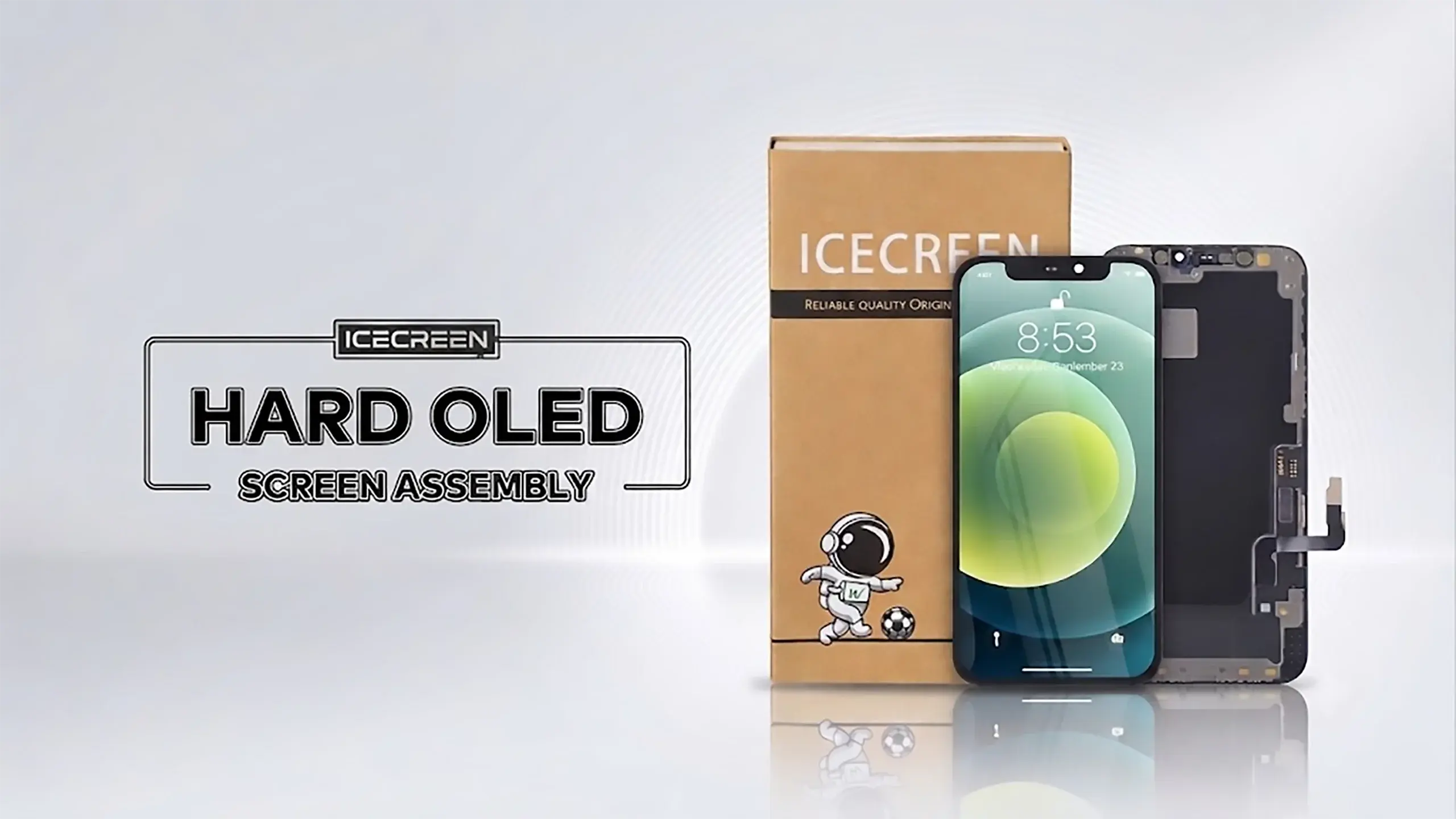
LCD vs OLED: Which One Is Right for You?
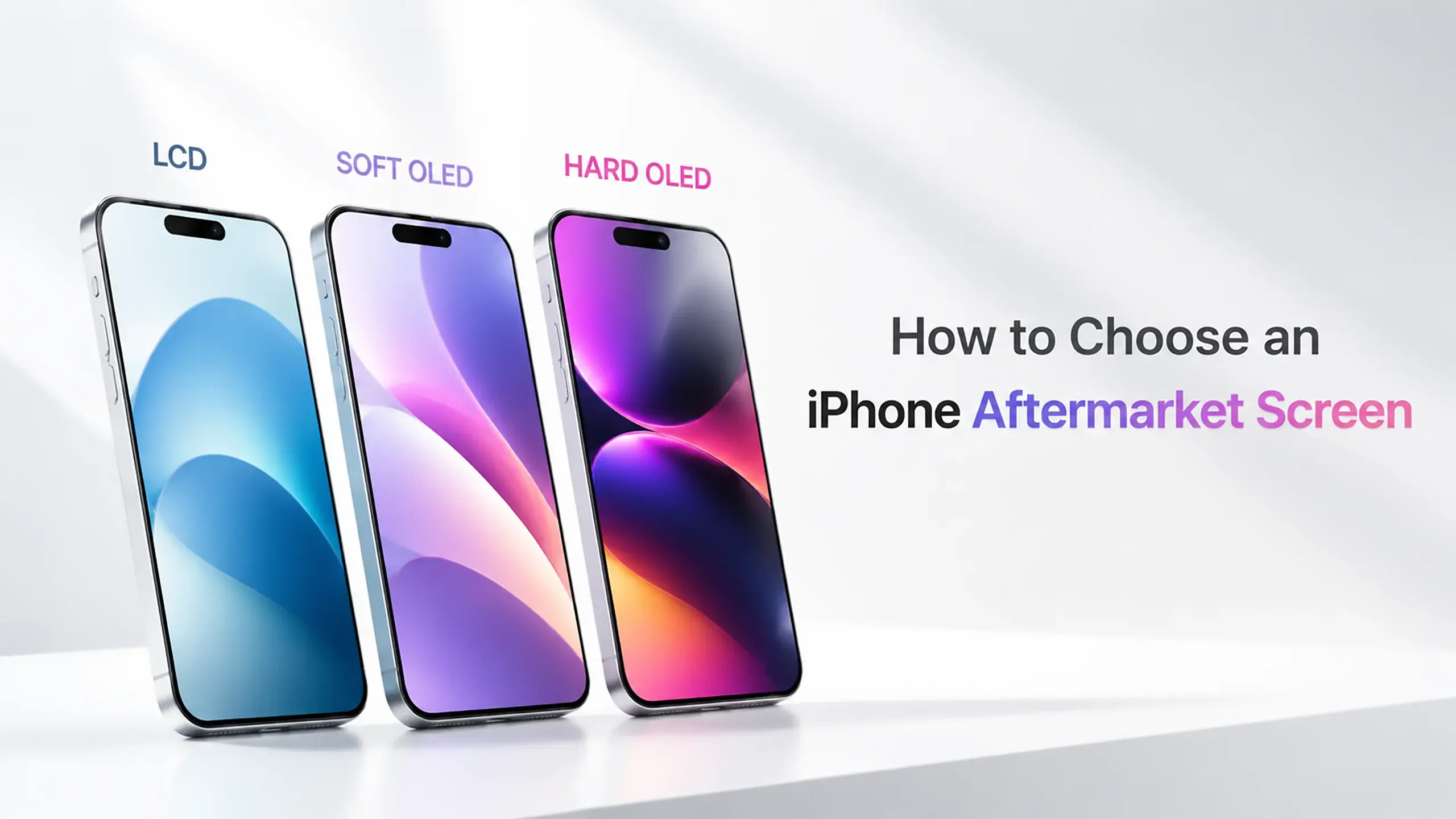
When choosing a smartphone replacement screen, you’ll typically come across two main display technologies: LCD (Liquid Crystal Display) and OLED (Organic Light-Emitting Diode).
Both are widely used in original devices and the aftermarket, but they differ significantly in display quality, power efficiency, durability, and cost. While OLED has become the standard for many flagship smartphones, LCD remains a popular choice thanks to its affordability and dependable performance.
Understanding the key differences between LCD vs OLED is essential for selecting the right replacement screen. Whether you’re restoring a premium device, offering a budget-friendly repair option, or sourcing screens in volume, choosing the appropriate display technology can influence the user experience, repair quality, and overall value.
In this guide, we’ll compare LCD vs OLED across the factors that matter most—from image quality and durability to common failure patterns and replacement recommendations—so you can determine which option is best suited to your repair needs.
What Is LCD?
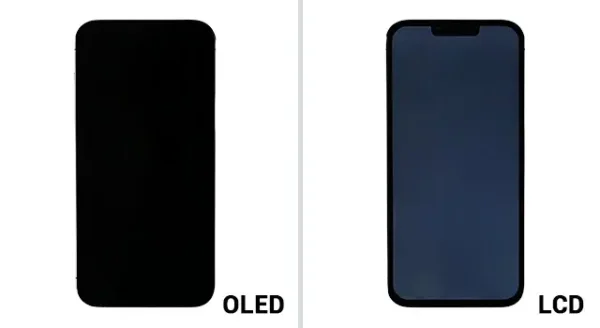
LCD (Liquid Crystal Display) uses a backlight to illuminate liquid crystals that control how images appear on the screen. Because every pixel depends on this backlight, the display cannot produce true black—dark areas are illuminated by the backlight and therefore appear dark gray instead.
LCD technology has been used in smartphones for many years and is still widely available in the aftermarket due to its mature manufacturing process and lower production cost.
Key Advantages of LCD
- More affordable than OLED
- Stable and mature manufacturing process
- No risk of screen burn-in
- Ideal for budget-conscious repairs
- Consistent supply across many smartphone models
Limitations of LCD
- Lower contrast ratio
- Less vibrant colors
- Narrower viewing angles
- Slightly thicker display structure because of the backlight
What Is OLED?
OLED (Organic Light-Emitting Diode) is a self-emissive display technology. Each pixel generates its own light, eliminating the need for a separate backlight.
Because individual pixels can switch off completely, OLED displays deliver true black levels, exceptional contrast, and richer colors. This is why most premium smartphones—including newer iPhone and flagship Android devices—use OLED panels.
Key Advantages of OLED
- True blacks and infinite contrast
- Rich, vibrant colors
- Wide viewing angles
- Faster response times
- Thinner and lighter display assemblies
- Better power efficiency when displaying dark content
Limitations of OLED
- Higher manufacturing cost
- More expensive replacement screens
- Potential burn-in after prolonged static image display
- Greater sensitivity to impact damage compared with some LCD panels
LCD vs OLED: Feature Comparison
| Feature | LCD | OLED |
|---|---|---|
| Display Quality | Good | Excellent |
| Black Levels | Dark Gray | True Black |
| Contrast Ratio | Moderate | Extremely High |
| Color Performance | Natural | Rich and Vibrant |
| Viewing Angles | Good | Excellent |
| Response Time | Moderate | Very Fast |
| Power Efficiency | Consistent | Better with Dark Content |
| Thickness | Thicker | Thinner |
| Burn-in Risk | None | Possible |
| Typical Cost | Lower | Higher |
Display Quality: The Most Noticeable Difference
When comparing LCD vs OLED, display quality is often the first difference users notice.
OLED displays offer significantly deeper blacks because each pixel can turn off individually. This creates much higher contrast and produces images that appear sharper and more immersive.
Colors on OLED panels are generally more vivid, making photos, videos, and games look more dynamic. Wide viewing angles also help maintain consistent color accuracy when the device is viewed from different directions.
LCD screens, while unable to match OLED’s contrast, still provide reliable color reproduction and sufficient brightness for everyday use. High-quality LCD replacement screens can deliver an excellent viewing experience, especially for devices originally designed with LCD technology.
For repair businesses, display quality plays an important role in customer satisfaction. Choosing a replacement screen that closely matches the original display helps create a better overall repair experience.
Power Efficiency
Power consumption differs because of how each technology produces light.
Since OLED pixels illuminate individually, black pixels consume almost no power. Smartphones using dark mode or displaying darker interfaces can therefore achieve better battery efficiency.
LCD displays rely on a backlight that remains active regardless of screen content. Whether the display is showing a black image or a white webpage, the backlight continues consuming roughly the same amount of power.
However, when displaying bright content, the difference in battery consumption between LCD and OLED becomes much smaller.
Durability and Common Failure Patterns
Neither technology is perfect. Understanding how they typically fail can help when selecting replacement screens.
Common OLED Issues
OLED displays may experience:
- Screen burn-in after displaying static content for extended periods
- Green or white vertical lines caused by impact damage
- Dead pixels
- Pixel aging over years of use
- Damage to flexible display cables after severe drops
Although modern OLED manufacturing has significantly reduced burn-in risk, it has not been completely eliminated.
Common LCD Issues
LCD replacement screens are more likely to experience:
- Backlight failure
- Light leakage around screen edges
- Bright spots
- Pressure damage to the liquid crystal layer
- Yellowish display caused by aging backlight components
Unlike OLED, LCD screens are immune to burn-in because they use a separate backlight instead of self-emitting pixels.
How to Choose Between LCD and OLED
The best choice depends on the smartphone model, customer expectations, and repair budget.
Choose OLED if:
- The device originally uses an OLED display
- Customers expect display quality similar to the original screen
- Color accuracy and contrast are priorities
- Repairing premium flagship smartphones
- You want to provide a high-end repair option
Choose LCD if:
- Budget is the primary concern
- Repairing older smartphone models
- Customers prefer a more economical solution
- The original device uses an LCD display
- Cost-effective repairs are the main objective
Offering both LCD and OLED replacement options allows repair businesses to serve customers with different budgets while maintaining flexibility across various repair scenarios.
Frequently Asked Questions
Is OLED always better than LCD?
Not necessarily. OLED offers superior image quality, but LCD remains an excellent choice for affordable repairs and devices originally equipped with LCD displays.
Can an OLED phone use an LCD replacement?
For some smartphone models, aftermarket LCD replacements are available for devices originally equipped with OLED displays. However, users should expect differences in display quality, thickness, brightness, and overall viewing experience.
Does OLED last longer than LCD?
Both technologies can provide years of reliable use. OLED may experience pixel aging or burn-in under certain conditions, while LCD is more susceptible to backlight-related issues over time.
Why are OLED replacement screens more expensive?
OLED panels use a more advanced manufacturing process and offer better display performance, resulting in higher production costs compared with LCD screens.
Conclusion
The LCD vs OLED debate isn’t about finding a universal winner—it’s about selecting the right replacement screen for the specific repair.
OLED delivers outstanding contrast, vibrant colors, and a premium viewing experience, making it the preferred choice for flagship smartphones and customers seeking original-level display quality.
LCD, on the other hand, remains a reliable and cost-effective solution for many repair scenarios. Its lower price, stable performance, and broad availability continue to make it an important option in the aftermarket.
Ultimately, the best replacement screen depends not only on the display technology but also on the quality of the product itself. By choosing a trusted supplier with consistent quality control, dependable warranty support, and stable supply, repair businesses can deliver better repair outcomes and build long-term customer confidence.