iPhone Hard OLED Screen Replacement: How to Choose a Reliable Display for Professional Repairs
Introduction
As the aftermarket repair industry continues to evolve, the demand for iPhone hard OLED screen replacement has grown significantly. Hard OLED displays have become a preferred option for repair businesses looking to balance display quality with cost efficiency, making them one of the most widely used replacement screen types for iPhone repairs.
However, not all iPhone Hard OLED Screen Replacement delivers the same performance. Differences in manufacturing processes, display components, quality control standards, and supplier capabilities can result in noticeable variations in brightness, touch responsiveness, durability, and long-term reliability.
For distributors, wholesalers, and repair businesses, selecting the right Hard OLED screen is about much more than finding the lowest price. Understanding the technology behind Hard OLED displays and knowing how to evaluate product quality can help reduce warranty claims, improve customer satisfaction, and maximize business profitability.
What Is a Hard OLED Screen?
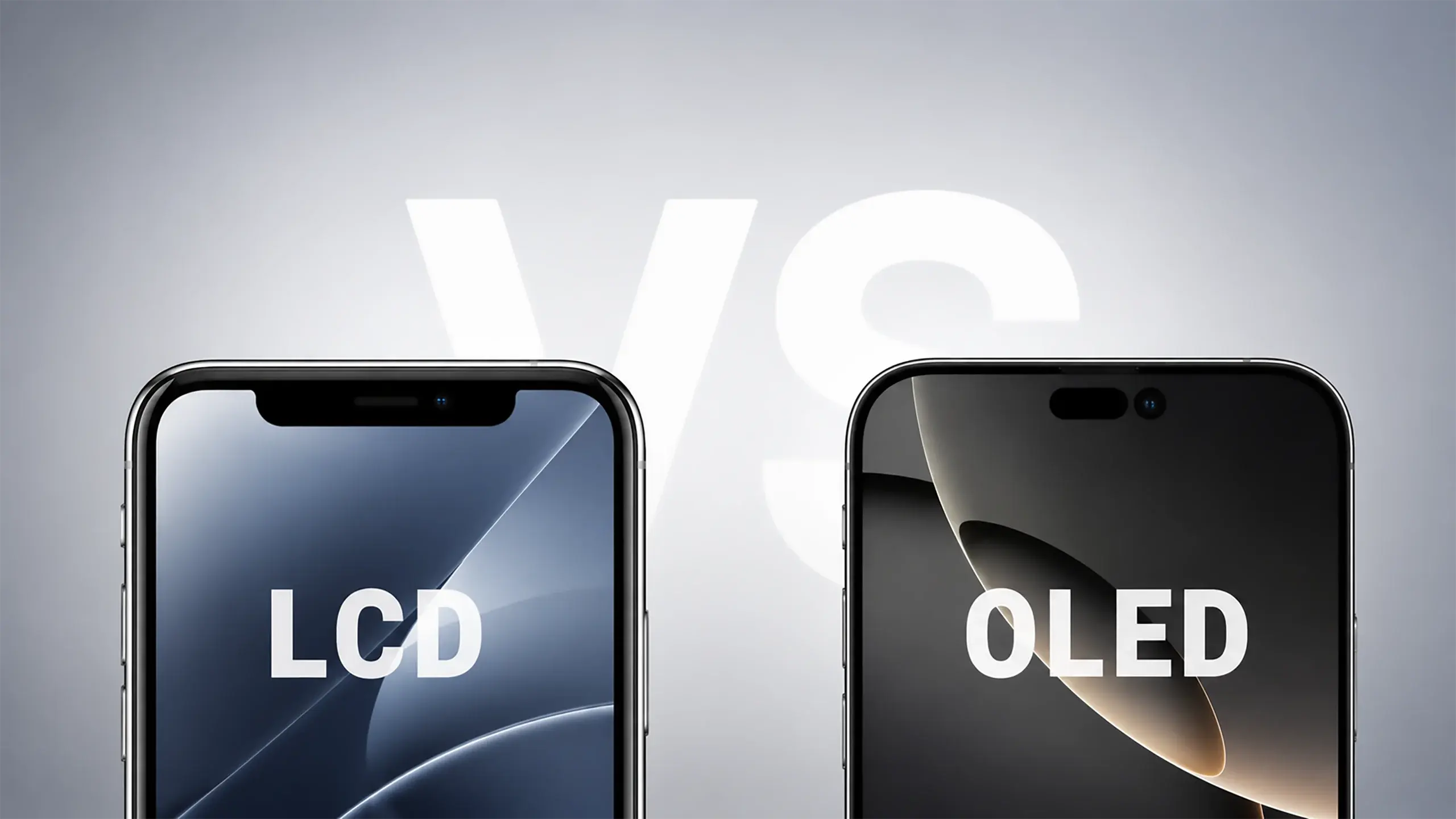
A Hard OLED screen is an aftermarket OLED replacement display built on a rigid glass substrate, unlike Soft OLED, which uses a flexible plastic substrate. Although both technologies produce the deep blacks and vibrant colors associated with OLED displays, Hard OLED can be manufactured at a lower cost, making it one of the most cost-effective OLED replacement options.
Key Features
| Feature | Hard OLED |
|---|---|
| Display Technology | OLED |
| Substrate | Rigid Glass |
| Contrast | Excellent |
| Color Performance | Rich & Vibrant |
| Brightness | High |
| Thickness | Medium |
| Cost | More Affordable than Soft OLED |
Pros
- Excellent OLED display quality
- More affordable than Soft OLED
- Better color and contrast than LCD
- Suitable for high-volume aftermarket repairs
- Widely available across iPhone models
Cons
- Less flexible than Soft OLED
- Slightly thicker construction
- More vulnerable to severe impact
- Not the closest match to original Apple displays
Comparison with Other Aftermarket Screen Types
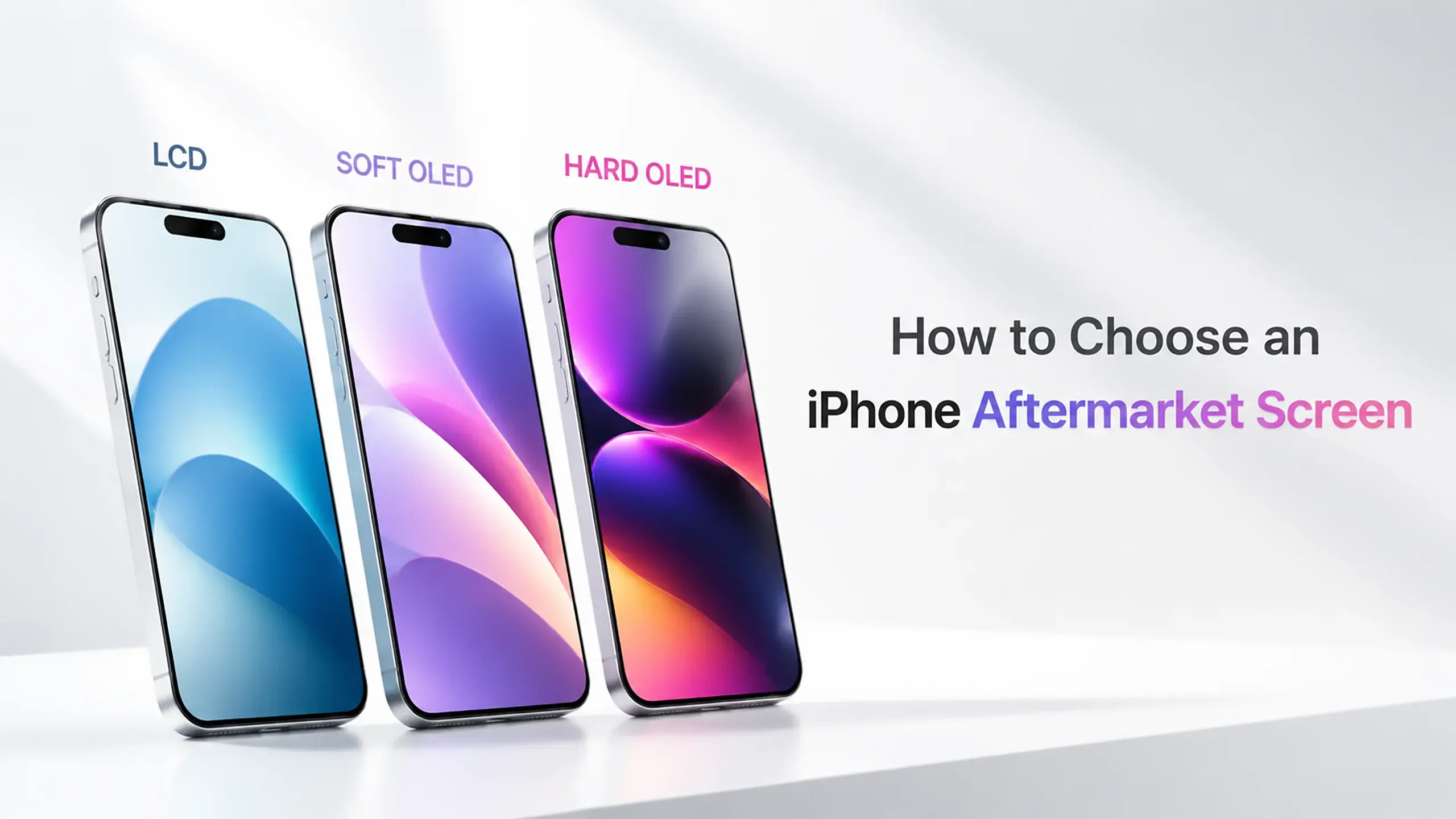
Each replacement screen technology serves a different market segment. Understanding their differences helps buyers select the right solution for different repair needs.
| Feature | LCD | Hard OLED | Soft OLED |
|---|---|---|---|
| Display Quality | ★★☆☆☆ | ★★★★☆ | ★★★★★ |
| Contrast | ★★☆☆☆ | ★★★★★ | ★★★★★ |
| Color Accuracy | ★★☆☆☆ | ★★★★☆ | ★★★★★ |
| Thickness | Thick | Medium | Thin |
| Flexibility | None | Low | High |
| Durability | Good | Moderate | Excellent |
| Cost | Lowest | Moderate | Highest |
| Recommended For | Budget Repairs | Mainstream Repairs | Premium Repairs |
For most aftermarket repair businesses, Hard OLED offers the best balance between display quality, replacement cost, and inventory flexibility, making it the preferred choice for everyday iPhone screen replacements.
How to Choose the Right Hard OLED Screen
Not all iPhone Hard OLED Screen Replacement is manufactured to the same standard. While product specifications may appear similar, differences become clear when comparing key performance indicators.
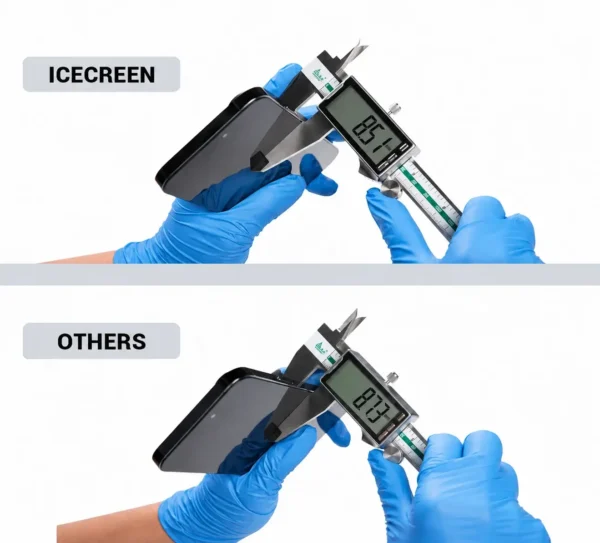
1. Screen Thickness
Screen thickness directly affects installation fit and the overall feel of the repaired device. A thinner display generally provides a closer-to-original appearance and reduces pressure on the frame during installation.
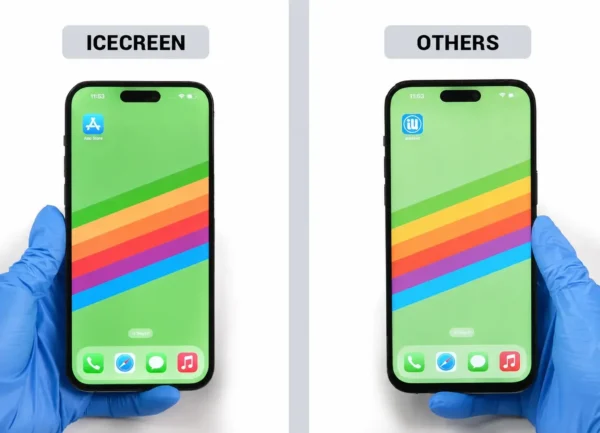
2. Chin Bezel
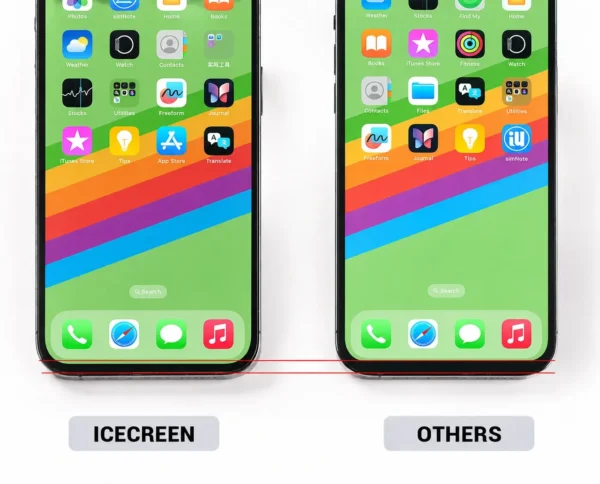
The bottom bezel (chin) is one of the most noticeable differences between aftermarket screens. A narrower bezel creates a cleaner appearance and provides a display closer to the original iPhone.
3. Brightness
Brightness affects outdoor visibility and overall display quality. Consistent brightness across the entire screen is just as important as peak brightness.
4. Color Accuracy
Accurate color reproduction creates a more natural viewing experience and better matches the original display.
5. Touch Responsiveness
Touch performance is critical for user experience. High-quality Hard OLED screens should provide fast response, smooth scrolling, and stable multi-touch performance.
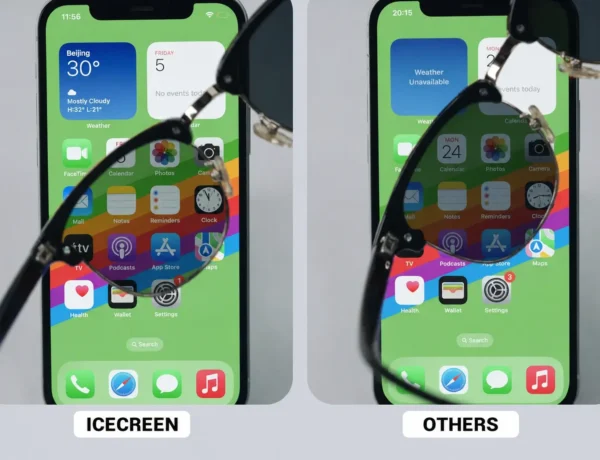
6. Polarized Sunglasses Visibility
Some aftermarket screens become difficult to read when viewed through polarized sunglasses. Better polarizer materials improve outdoor usability.
Why ICECREEN Hard OLED Screens Stand Out
A reliable replacement screen is not defined by specifications alone. Consistent quality across every production batch is equally important for repair businesses.
ICECREEN Hard OLED screens are designed with this principle in mind.
Consistent Display Quality
Each screen is engineered to deliver stable brightness, vivid colors, and responsive touch performance across different production batches.
Slim Bezel Design
A refined bezel design provides a display appearance that is closer to the original iPhone.
Responsive Touch Experience
Optimized driver ICs and precision manufacturing ensure smooth touch response and accurate multi-touch performance.
Multi-Stage Quality Inspection
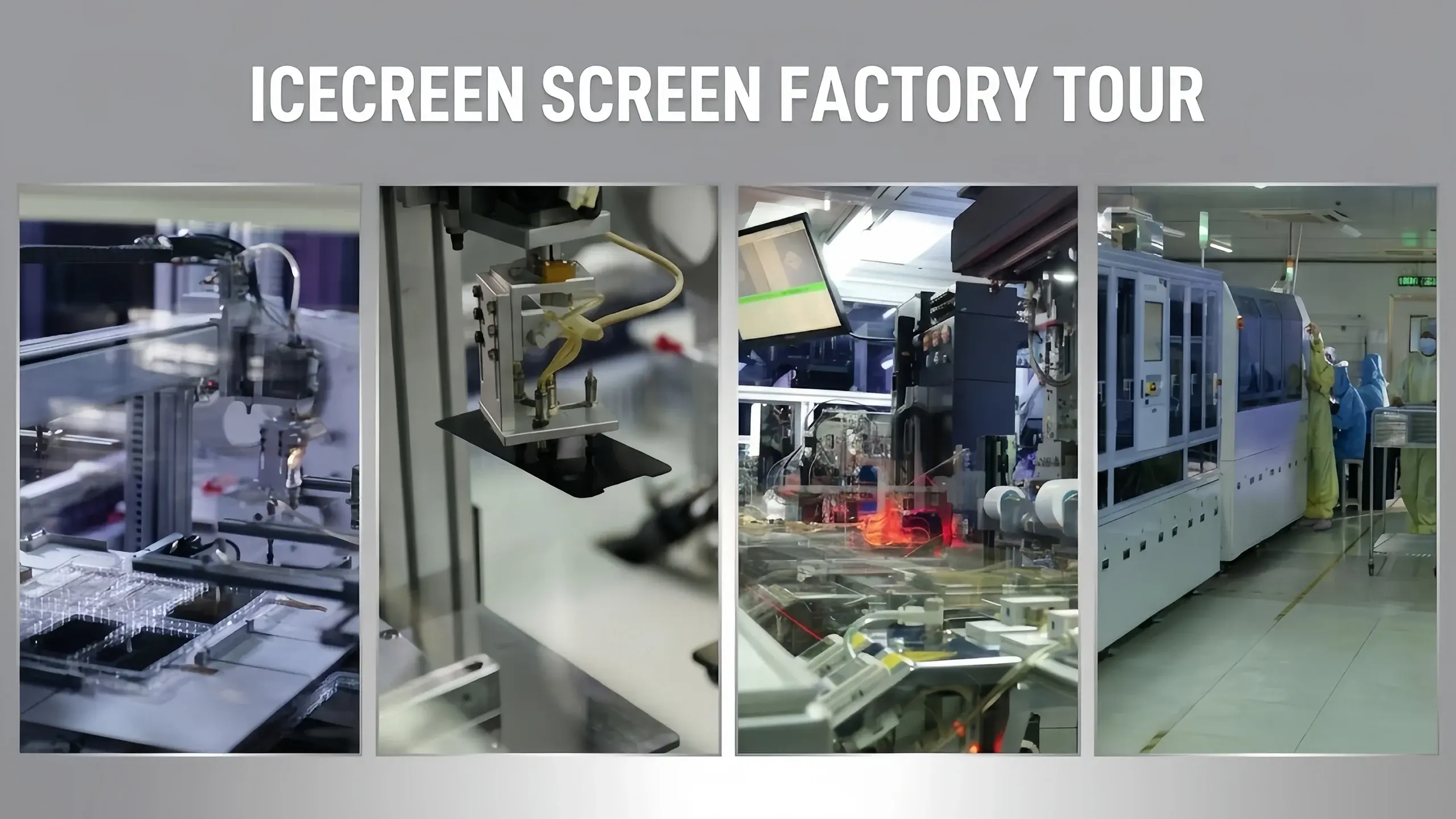
Every ICECREEN Hard OLED screen undergoes multiple quality inspections before shipment, including display testing, touch verification, cosmetic inspection, and functional validation.
Stable Supply for Wholesale Buyers
With broad model coverage and consistent production capacity, ICECREEN supports distributors and repair businesses with reliable inventory availability and long-term supply.
Frequently Asked Questions
Is Hard OLED better than LCD?
Yes. Hard OLED offers significantly better contrast, deeper blacks, richer colors, and a more premium viewing experience than LCD replacement screens.
Is Hard OLED as good as Soft OLED?
Soft OLED provides greater flexibility and more closely matches original Apple displays, while Hard OLED offers a better balance between performance and cost for mainstream repairs.
Why do Hard OLED screens from different brands perform differently?
Performance differences are mainly caused by variations in OLED panel quality, driver ICs, lamination technology, and factory quality control standards.
Which Hard OLED screen is best for wholesale buyers?
Wholesale buyers should look beyond price and evaluate factors such as display consistency, manufacturing quality, product reliability, and supplier stability. A dependable supplier can help reduce warranty claims and improve long-term purchasing efficiency.
Conclusion
Choosing the right iPhone hard OLED screen replacement is about more than comparing prices. Display performance, structural precision, and manufacturing quality all influence the reliability of the final repair.
By understanding the differences between aftermarket screen technologies and evaluating the key characteristics of Hard OLED displays, buyers can make more informed purchasing decisions. For businesses seeking a dependable combination of display quality, consistency, and stable supply, ICECREEN Hard OLED screens provide a reliable solution for professional iPhone repairs.